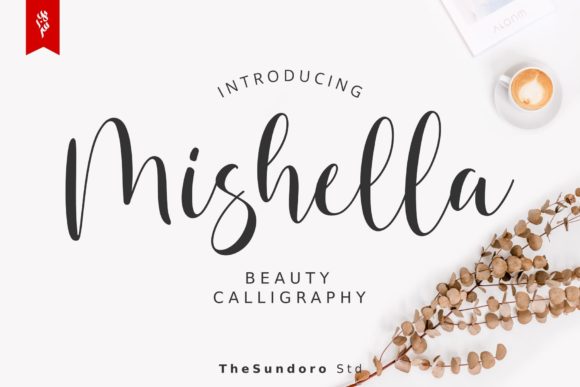
Mishella Script Handwritten Font for Editorial Elegance
As a publisher and editorial designer who crafts everything from digital newsletters to printed workbooks, I rely on typefaces that do more than look beautiful—they shape tone, guide attention, and deepen reader connection. Mishella is one of those rare Script Handwritten fonts that feels both intentional and effortless: it’s not just decorative, but deeply functional in editorial contexts where warmth, authenticity, and visual rhythm matter.
Mishella for Wedding Invitations and Elegant Branding
When designing wedding guides, seasonal printables, or luxury lifestyle newsletters, Mishella becomes an immediate asset—not just as a decorative flourish, but as a consistent voice across your brand. Its flowing structure and elegant contrast make it ideal for cover titles, chapter openers, and pull quotes in PDF wedding planners or printable vow worksheets. Unlike many script fonts that sacrifice legibility at smaller sizes, Mishella holds clarity even at 18–24pt in print-ready layouts—especially when used over clean backgrounds or paired with a warm serif body font like Playfair Display or a neutral sans like Inter for captions and instructions.
Mishella for Quote Graphics and Social Media Story Highlights
For bloggers and course creators building engagement through quote-driven content—think Instagram story highlights, Pinterest pins, or newsletter sign-up banners—Mishella delivers emotional resonance without visual noise. Its natural stroke variation and organic spacing invite pause and reflection, making it perfect for short, impactful lines: “Your journey begins here,” “Slow down. Breathe. Begin.” As a Script Handwritten font, it avoids the sterility of AI-generated text while remaining highly legible on mobile screens. Use it at 36–48pt for static graphics, and always test contrast against your background color—Mishella shines best with soft neutrals or muted pastels, not busy textures.
Mishella for Greeting Cards and Print-On-Demand Publications
If you design greeting cards, seasonal digital magazines, or limited-run zines, Mishella adds tactile sophistication without requiring hand-lettering skills. It works beautifully for front-cover titles, inside-message headers, and signature lines—especially when exported as vector-based outlines for print-on-demand platforms like Canva Print or Gelato. Because Mishella is a premium Fonts asset, it includes OpenType features like contextual alternates and swash capitals (where applicable), letting you fine-tune rhythm across multi-word headlines. Just remember: avoid using it for full-body text—it’s a display font, not a reading font—and always pair it with a highly readable companion (e.g., Lora for serif, or Manrope for sans).
Mishella for Business Cards and Creator Newsletter Headers
Your business card isn’t just contact info—it’s your first impression as a content creator, coach, or independent publisher. Mishella transforms that small space into something memorable: use it for your name or tagline, then balance with a crisp sans-serif for your title, website, and email. In newsletters, apply Mishella selectively—to section dividers (“This Week’s Insight”), welcome headers (“You’re in the right place”), or featured resource titles. Its handwritten character signals approachability and care, which builds trust faster than generic sans-serifs—especially in niches like wellness, education, or creative entrepreneurship.
Mishella for Thank You Cards and Reader Engagement Touchpoints
Every thank-you card, post-purchase email, or subscriber onboarding sequence is a quiet opportunity to reinforce brand identity. Mishella excels here because its elegance feels personal, not performative. When readers receive a beautifully typeset “Thank you for joining our community” in Mishella, followed by a clean body font and warm tone, they register intentionality—not just design, but care. For downloadable lead magnets (e.g., “7-Day Journaling Starter Kit”), use Mishella on the cover and chapter title pages, then switch to a highly legible serif or sans for instructions and prompts. This hierarchy improves scannability while preserving emotional warmth.
Mishella for Logos and Publication Identity Systems
While Mishella isn’t intended as a standalone logo font for high-contrast signage or tiny app icons, it’s exceptionally effective for editorial logos—especially for boutique newsletters, literary podcasts, or indie publishing imprints. Paired with a subtle monogram or minimalist icon, Mishella conveys craftsmanship and narrative depth. As part of a broader Script Handwritten identity system, it can anchor your visual language across covers, social bios, email footers, and even podcast episode thumbnails. Just ensure commercial licensing covers your use case: if you’re bundling Mishella into client-facing templates, paid ebooks, or editable Canva kits, verify the license permits redistribution.
Mishella for Ebook Covers and Chapter Title Pages
An ebook cover is often judged in under three seconds—so typography must communicate genre, mood, and credibility instantly. Mishella does this with quiet authority. On a memoir, poetry collection, or reflective coaching guide, its flowing strokes suggest intimacy and sincerity; on a wedding planning ebook, it evokes romance without cliché. For chapter title pages, use Mishella at 48–60pt with generous leading and centered alignment—then drop into a warm, well-spaced serif for the first paragraph. This pairing creates breathing room and visual pacing, supporting sustained reading rather than overwhelming it.
Practical Notes for Editorial Designers
- Mishella is best deployed at larger sizes (18pt and up) for screen and print—never for body copy or dense captions.
- Always test rendering across devices: some script fonts appear thinner on Windows or older iOS versions; consider slight stroke-weight adjustments in export settings.
- Check included file formats: OTF and TTF are standard, but if you need web use (WOFF2), confirm web licensing is included.
- For multilingual projects, verify glyph coverage—Mishella supports extended Latin characters, but may not include Cyrillic or Vietnamese diacritics.
- Commercial licensing is essential for any public-facing or monetized use: ebooks sold on Gumroad, client-branded newsletters, Notion templates, or printable planners all require appropriate permissions.